


NEWS CENTER
Corporate News • Factory Updates • Exhibition Events • Customer Visits
NEWS CENTER
Corporate News • Factory Updates • Exhibition Events • Customer Visits
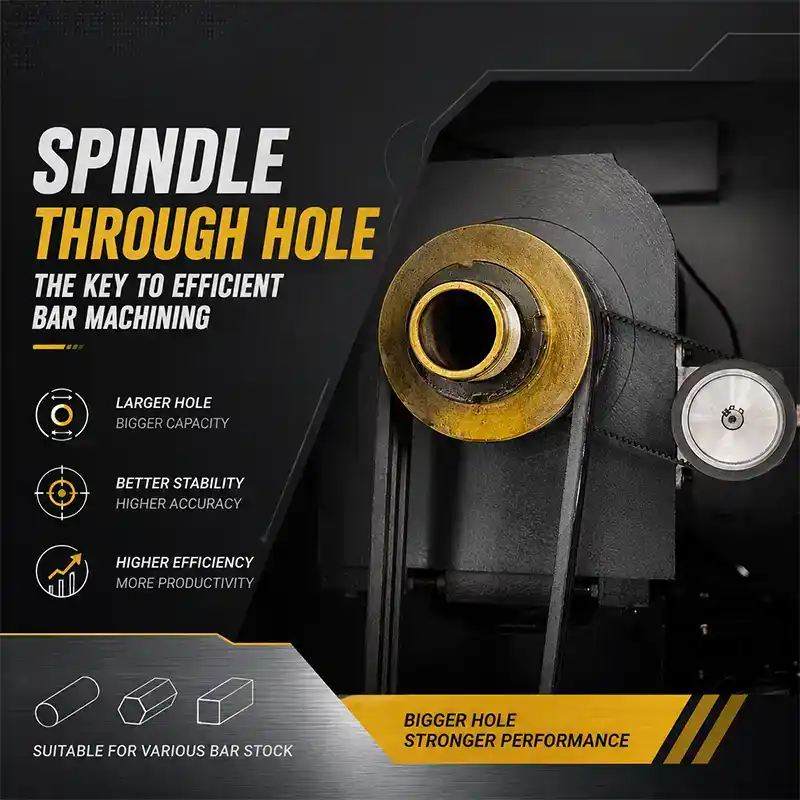
In CNC machining, the Spindle Bore is an important factor that affects the capacity of a CNC Machine. It determines whether bar stock can pass through the Lathe Spindle. It also influences feeding efficiency, machining range, material use, and production cost.
For shafts, sleeves, flanges, automotive parts, and other turned components, choosing the right Spindle Bore Size is essential. If the bore is too small, the bar stock cannot pass through the spindle. The material must then be cut into short blanks before machining.
This adds more preparation work, increases manual handling, and reduces production efficiency.
When the Spindle Bore matches the bar size, machining process, and feeding system, the CNC Lathe can support continuous feeding and batch production. Therefore, buyers should not only compare turning diameter, machining length, and spindle speed. They should also check the actual bar capacity of the CNC Lathe Machine.
The Spindle Bore is the hole that runs through the center of the Lathe Spindle. During bar stock machining, material enters from the rear of the spindle. The chuck then clamps the section that needs to be machined.
For example, a CNC Lathe may have an 82 mm Spindle Bore. In theory, material smaller than 82 mm can enter the spindle. However, the actual maximum bar diameter is usually slightly smaller.
This is because the internal space may also be limited by the draw tube, chuck, collet, feeder, and spindle structure. For this reason, buyers should confirm both the Spindle Bore Size and the maximum bar capacity provided by the manufacturer.
The main functions of the Spindle Bore include:
• Allowing bar stock to pass through the spindle
• Increasing the clamping range for long bars and shafts
• Supporting automatic bar feeding
• Reducing material pre-cutting
• Reducing repeated clamping
• Improving batch machining efficiency
For companies that process bars, tubes, and shaft parts, the Spindle Bore is one of the most important CNC Lathe specifications.
The most direct effect of the Spindle Bore is whether the material can pass through the Lathe Spindle.
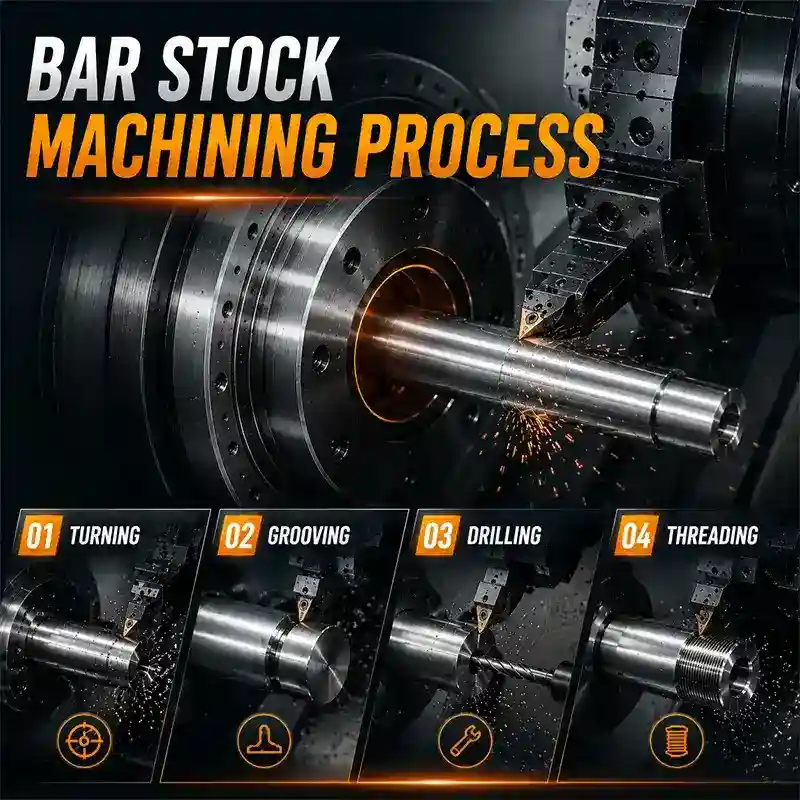
When the bar diameter is smaller than the machine's actual bar capacity, the material can enter from the rear of the spindle. The operator only needs to extend the machining section beyond the chuck.
The CNC Lathe can then perform turning, grooving, drilling, tapping, and threading.
After one part is completed, the bar can move forward. The CNC Machine can then start the next cycle. This method is suitable for producing short shafts, pins, sleeves, connectors, and automotive parts in large quantities.
If the bar diameter is larger than the spindle capacity, the material cannot pass through. Long bars must be cut into separate blanks before machining.
This creates several problems:
• More sawing and preparation work
• More manual loading and clamping
• Longer non-cutting time
• Lower automation
• Higher material waste
• More positioning errors
The Spindle Bore also affects machining stability. If the gap between the bar and spindle is too large, a long bar may vibrate or swing at high speed.
For slender bars, the CNC Lathe Machine should use a suitable bar feeder, guide sleeve, or support device.
A larger Spindle Bore is not always the best choice. The correct size depends on the bar diameter, workpiece length, spindle speed, production volume, and feeding method.
Different industries require different Spindle Bore Sizes.
Automotive manufacturers often produce shafts, flanges, bushings, and connectors. A bore size of around 52 mm to 66 mm can meet many common production needs.
The hydraulic industry often processes thick-wall tubes, cylinder fittings, and valve components. These applications may require an 82 mm Spindle Bore or a larger configuration.
Oil and gas, construction machinery, and heavy transmission industries usually process larger bars and pipes. These companies may need a heavy-duty CNC Lathe with a Spindle Bore of 105 mm or more.
Hardware, instrument, and electronic component manufacturers usually process smaller workpieces. A medium or small Metal Lathe may provide enough capacity while keeping equipment costs under control.
The final choice should always be based on the actual material size and machining process.
The first step is to confirm the bar diameters that your company processes most often.
Do not select a CNC Machine based on only one current product. Consider both present orders and possible future work.
The actual bar capacity should be slightly larger than the normal material diameter. This extra space helps accommodate material tolerance, surface irregularity, and feeding variation.
For example, if your company often processes 60 mm bars, do not choose a CNC Lathe Machine with an exact 60 mm bar capacity. A slightly larger capacity is safer and more practical.
When selecting the Spindle Bore Size, consider the following factors.
Confirm the largest bar or tube diameter used in production. The spindle must provide enough clearance for the material.
The Spindle Bore controls material passage. The bed length and Z-axis travel control the machining length. These specifications should be evaluated together.
For single parts or small batches, manual loading may be acceptable. For mass production, a bar feeder can improve efficiency and reduce labor.
Check the feeder range, bar length, spindle height, and connection method. The feeder and Lathe Spindle must work together smoothly.
A CNC Lathe is a long-term investment. A slightly larger Spindle Bore can give the company more flexibility for future products.
However, choosing a bore that is much larger than necessary may increase the machine price. The final decision should balance production needs, machine capability, and budget.
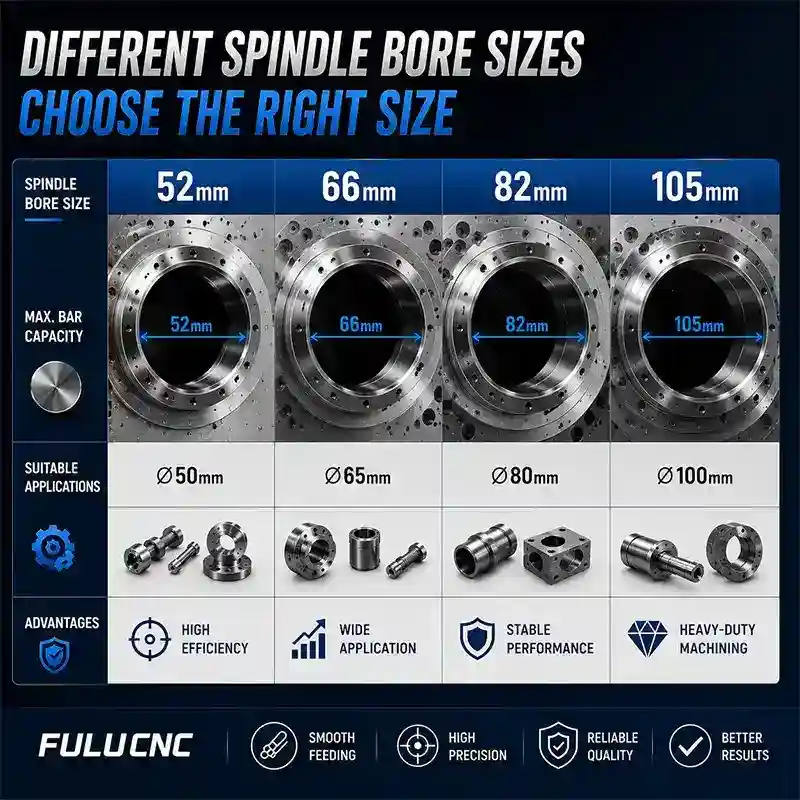
A CNC Lathe with a large Spindle Bore can process thicker bars and tubes. It is suitable for shafts, sleeves, pipe fittings, flanges, and heavy mechanical parts.
Its main advantages include:
Wider Machining Range
A larger bore can handle more material sizes. This makes the CNC Machine more flexible when product specifications change.
Less Material Pre-Cutting
Bar stock can pass directly through the Lathe Spindle. This reduces sawing work and shortens preparation time.
Continuous Automatic Feeding
The CNC Lathe Machine can work with an automatic bar feeder. This supports continuous feeding, machining, and cutting.
Higher Production Efficiency
Less manual loading and clamping reduces the time required for each part. One operator may also manage several machines.
Better Material Utilization
Continuous bar machining allows better control of blank length. It reduces excess material and end waste.
Fewer Clamping Errors
Multiple parts can be produced from one bar feeding setup. This reduces repositioning errors and improves batch consistency.
A large Spindle Bore does not automatically mean better accuracy or stronger cutting performance. Machine quality also depends on the bed structure, spindle bearings, spindle motor, guideways, turret, and control system.
When selecting a CNC Lathe, the Spindle Bore should be considered together with workpiece size, material, accuracy, production volume, and automation needs.
First, confirm the following:
Maximum turning diameter
Maximum machining length
Bar or tube diameter
Workpiece material
Accuracy requirements
Surface finish requirements
Monthly production volume
Required machining operations
Then compare the spindle speed, spindle power, turret type, chuck, control system, and feeding method.
For small and medium bars, a standard flat-bed or slant-bed CNC Lathe may be suitable.
For large bars, long shafts, and heavy parts, a large-bore heavy-duty CNC Lathe is a better choice.
For oil pipes, casing, drill rods, and large pipe threads, a pipe thread CNC Lathe is usually more suitable. This type of CNC Machine often uses a larger Spindle Bore and front and rear chucks. The design improves the support and clamping stability of long pipes.
A conventional Metal Lathe may be suitable for repair work and low-volume production. However, a CNC Lathe Machine is generally better for repeatability, automation, and batch production.
Before purchasing a machine, provide the manufacturer with:
• Workpiece drawings
• Bar or pipe diameter
• Maximum workpiece length
• Material type
• Required accuracy
• Surface finish requirements
• Expected production volume
• Required machining operations
• Automatic feeding requirements
• Chuck and turret requirements
With this information, the manufacturer can recommend a suitable Spindle Bore Size, bed length, spindle power, and machine configuration.
The Spindle Bore directly affects the bar stock capacity of a CNC Lathe. It also influences feeding, clamping, production efficiency, and material use.
A suitable Spindle Bore Size can reduce blank pre-cutting, support automatic feeding, and improve batch production. A bore that is too small limits the material range. A bore that is too large may increase the cost of the CNC Machine without providing real production value.
Companies should choose the Lathe Spindle configuration based on common bar diameters, workpiece length, production volume, and future requirements.
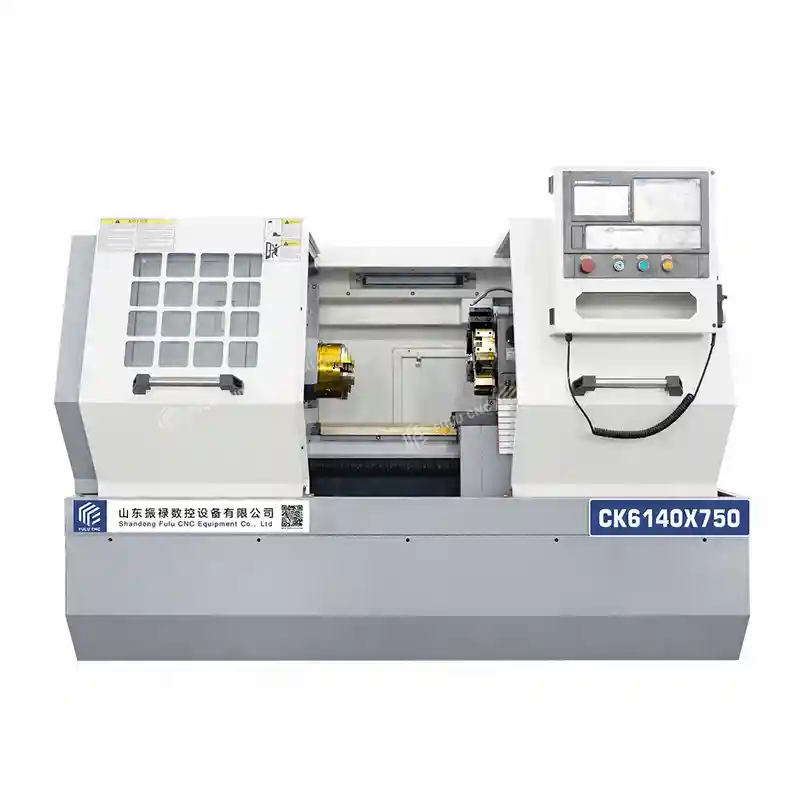
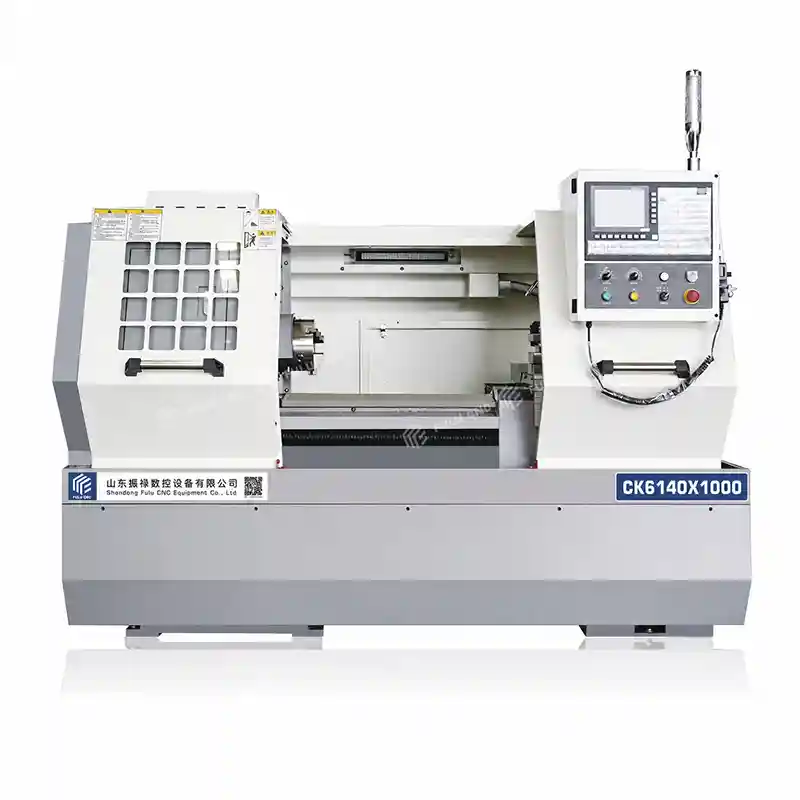
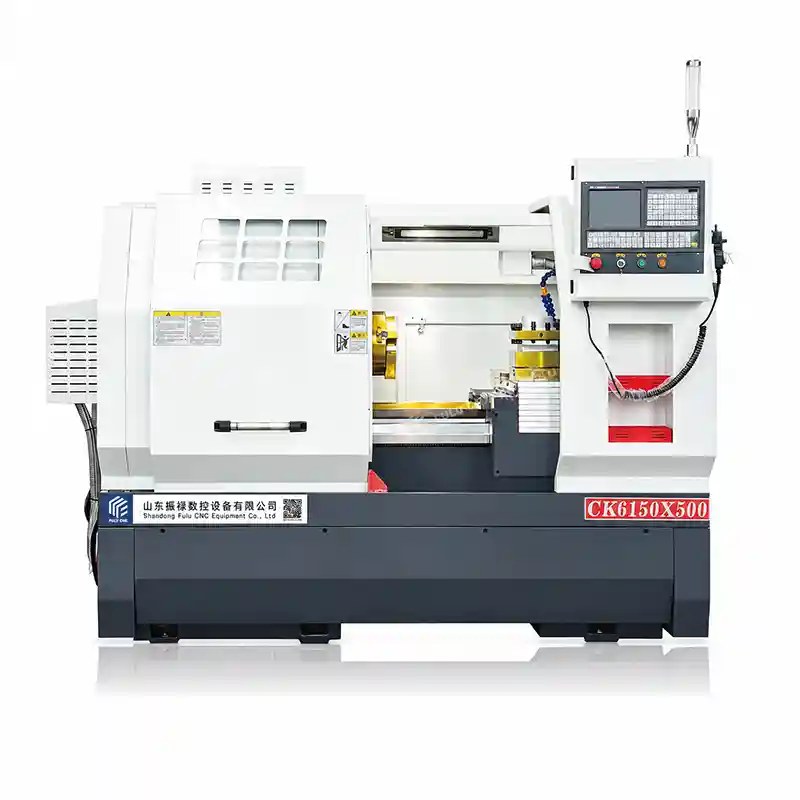
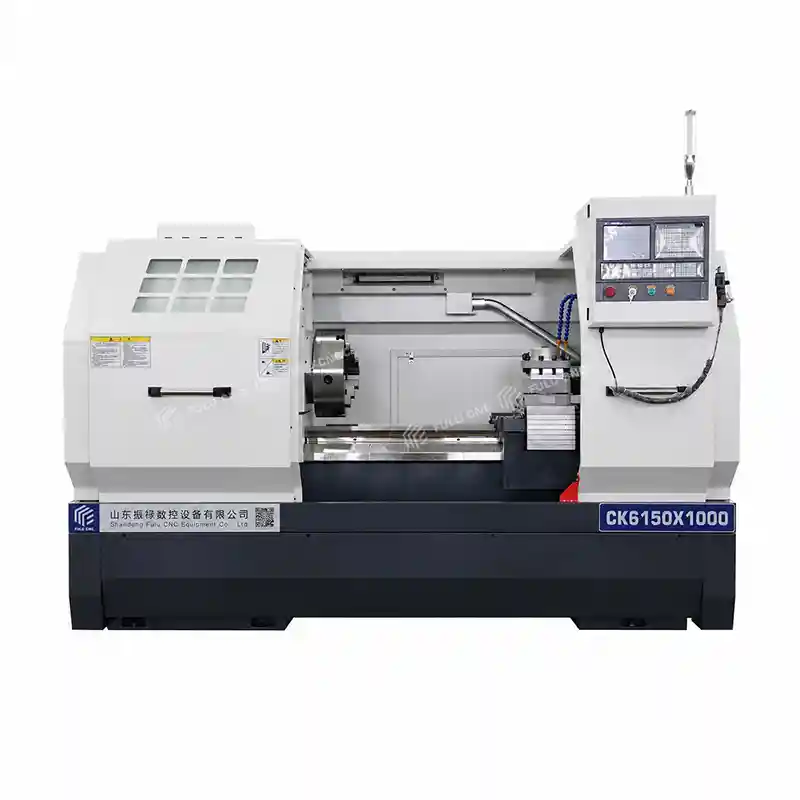
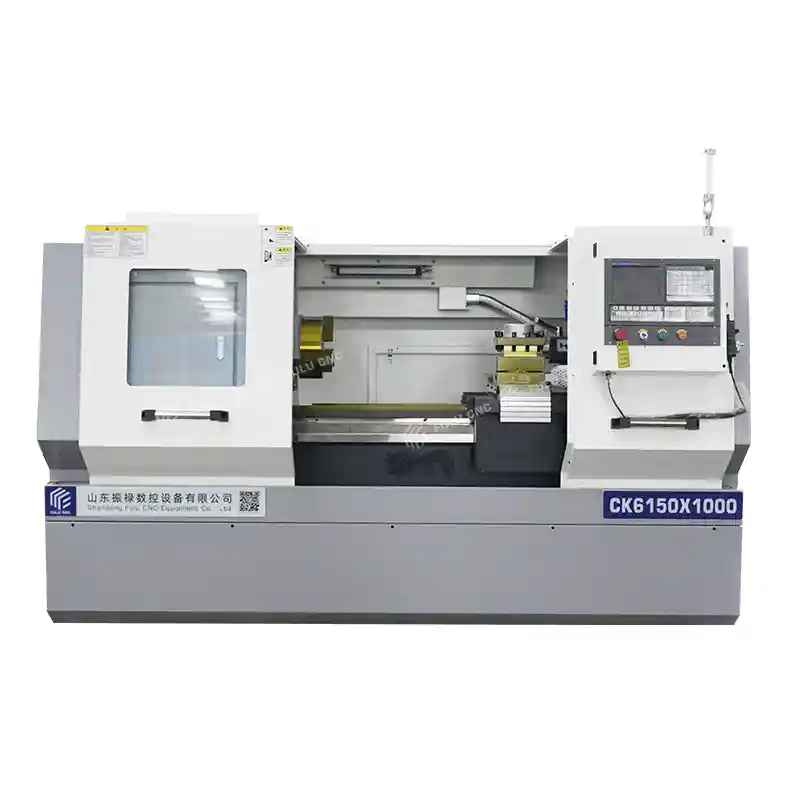
FULU CNC provides flat-bed CNC lathes, slant-bed CNC lathes, heavy-duty CNC lathes, and pipe thread CNC lathes. Different Spindle Bore Sizes, machining lengths, control systems, chucks, and turrets are available.
Send us your workpiece drawing, bar size, and production requirements. FULU CNC engineers will recommend a suitable CNC Lathe Machine and spindle configuration for your application.


Plsease input value
Plsease input value
Plsease input value
